
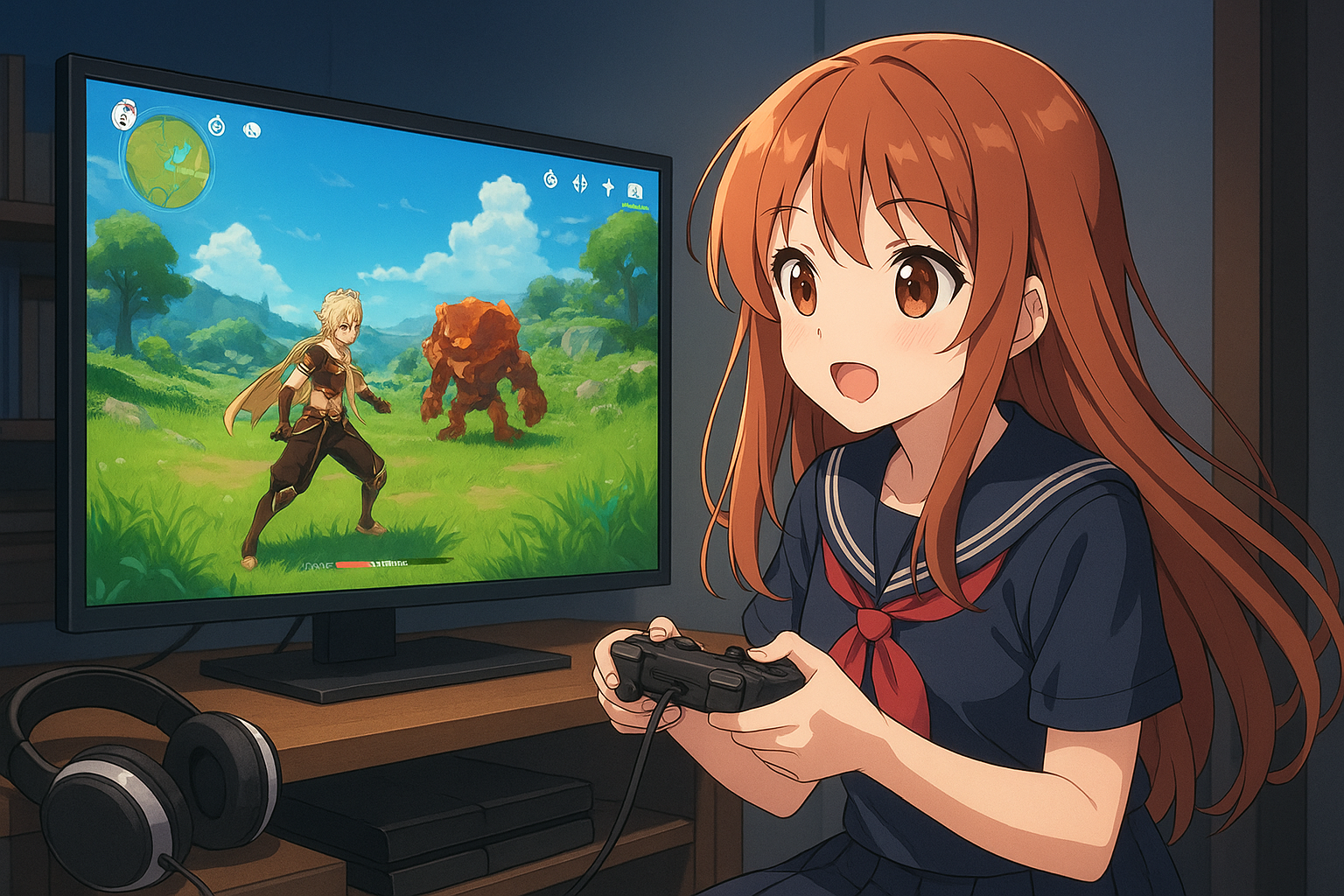
Anime and video games have long shared an exciting and influential relationship, coming together in ways that shape entire genres, fan communities, and even modern gaming culture itself. For decades, the captivating style of Japanese animation and the immersive worlds of interactive entertainment have overlapped to create unforgettable experiences for fans. This article explores how anime and games have evolved together, analyzing their shared aesthetic, storytelling depth, and cultural significance, while considering how their union has defined entire genres like fighting game titles, multiplayer modes, action game RPGs, and other groundbreaking innovations in video games.
Roots of Japanese Animation and Early Gaming
Anime first gained notoriety in the late 20th century, when series such as Astro Boy, Mobile Suit Gundam, and Dragon Ball brought a unique visual dynamism to storytelling. Around the same time, Japan was emerging as a powerhouse in home console gaming. Nintendo and later Sega brought character-driven games to a mass audience, creating iconic franchises like Super Mario and Sonic the Hedgehog.
The early cross-pollination between anime and games emerged naturally. For one, many early anime were influenced by science fiction, fantasy, and futuristic storytelling, which aligned perfectly with the imaginative play offered by interactive entertainment. Moreover, anime’s bold visual style—big eyes, exaggerated expressions, and over-the-top fight sequences—was easily adaptable to the pixelated graphics of the 8-bit and 16-bit eras. This synergy led to a wealth of game adaptations based on popular anime and vice versa of esports.
Anime Aesthetics in Gaming
The influence of anime on gaming aesthetics cannot be overstated. From costume design and character archetypes to sweeping narratives, anime-inspired visuals became a cornerstone of many Japanese-developed titles. Series such as Final Fantasy, Tales of Symphonia, and Persona owe much of their popularity to an art style that mirrors the dramatic boldness of anime.
Key anime tropes—like the determined hero, the quirky sidekick, and the tragic rival—translated seamlessly into gaming narratives. This allowed developers to flesh out characters beyond functional gameplay roles, creating experiences that were narratively rich and visually striking. Western players in particular gravitated toward these games because they offered a sense of fantasy and drama rarely found in Western-developed titles of the 1990s, which often focused more on mechanics than storytelling.
The Rise of Fighting Game Culture
One of the most important intersections between anime and gaming lies in the fighting game genre. Titles like Street Fighter II, Guilty Gear, and Dragon Ball FighterZ blend anime-inspired combat choreography with fluid, competitive gameplay. These games thrive on exaggerated energy blasts, acrobatic martial arts, and cinematic character introductions—all standard fare in anime battle sequences.
Notably, Guilty Gear is both a love letter to anime and a pillar within competitive fighting communities. Its art style is deliberately steeped in anime tradition while building an advanced mechanical system recognizable to esports fans. Similarly, adaptations like Dragon Ball FighterZ succeed not just because of their ties to a famous franchise, but because they replicate the explosive pacing and spectacle of anime fight scenes within the game itself.
This mixture highlights the broader cultural synergy of anime and games: battle-driven series like Naruto or One Piece often see life in gaming through fighting titles, becoming hubs for competitive play and community-driven tournaments.
Multiplayer Modes and Community Building
The anime-game relationship also thrives in multiplayer modes, a development that has revolutionized interactive entertainment. Anime-inspired MMORPGs such as Final Fantasy XIV and Phantasy Star Online 2 illustrate how shared worlds can merge anime aesthetics with community-driven play. Players are able to create avatars that resemble characters out of their favorite shows, engage in epic storylines, and interact socially with like-minded fans around the globe.
This community-driven play directly reflects the anime fandom’s sense of collectivism. Just as anime fans congregate in conventions to celebrate shared stories, gamers in multiplayer environments develop guilds, teams, and alliances, echoing the camaraderie and shared passion found in anime culture. The overlap ensures a continuous cycle of creative engagement, blurring the line between being part of a fandom and being part of a gaming community.
Narrative Depth: Anime and Games as Storytelling Mediums
Anime is renowned for its ability to explore sophisticated narrative themes, often delving into philosophical, political, or emotional territory. Similarly, video games have grown beyond the “arcade thrill” into deep storytelling experiences. The overlap is striking: anime’s episodic format and expansive arcs reflect the pacing of many narrative-driven games.
Games like Persona 5 draw heavily from anime tropes, from high school settings intertwined with supernatural elements to an ensemble cast who deal with personal struggles while engaging in a larger battle against oppression. Fans treat these titles as both an anime series they can binge through cutscenes and an interactive game they can control.
Western games have increasingly borrowed the anime-inspired model of building character-driven narratives. Titles such as Life is Strange echo anime in their episodic release structures, emotional intensity, and character focus, demonstrating just how influential this cycle has become.
Action Game RPGs: The Anime Blueprint
Another genre shaped by the anime-game connection is action game RPGs. These hybrids draw the cinematic combat and character-driven narratives of anime into interactive storytelling experiences. Consider Kingdom Hearts, which meshes Disney’s Western cartoon heritage with Japanese anime-influenced design to create a unique action-RPG style. Similarly, Xenoblade Chronicles reinstates the monumental scope of anime plots, offering cosmic themes, philosophical depth, and mechanical experimentation.
In these games, cutscenes often function as anime episodes, complete with exaggerated battles, vibrant aesthetics, and sprawling adventures. Players aren’t just button-mashing through combat; they’re living through an anime-like saga. This structure continues to expand in modern action-RPG design, where blending anime visuals with player agency sets the stage for compelling hybrid experiences.
Cross-Media Success Stories
Many of the most successful anime franchises extend to gaming with extraordinary success. Pokémon, perhaps the most famous, simultaneously exists as an anime series, trading card game, and video game empire. The anime enhances the sense of narrative while the games give interactivity, offering different angles of engagement under one brand identity.
Other anime like Yu-Gi-Oh! and Digimon similarly found longevity by existing in both mediums. For fans, switching between episodes and game formats only strengthens connection to the story. Importantly, fandom participation reinforces loyalty: what viewers watch on screen in animated form, they can then embody through gameplay.
Conversely, games such as Final Fantasy have received anime spin-offs and films, pushing the original gaming product into widespread cultural consciousness. This cross-media adaptability demonstrates how anime and games continue to support one another, fueling both consumption and creative invention.
Esports, Anime, and Global Appeal
The esports industry has also benefitted greatly from anime-inspired titles. Anime-styled fighting game tournaments, especially in games like Dragon Ball FighterZ and BlazBlue, attract players and audiences worldwide due to their energetic visuals and competitive depth. Additionally, anime-centric art and fan culture have given esports scenes identities distinct from traditional sports.
Interestingly, esports commentary and fan culture often borrow enthusiasm from anime fandom, with dramatic rivalries, backstories, and epic “final battles” celebrated with language and dramatization reminiscent of anime episodes. The overlap deepens the shared community, integrating fans across media categories.
The Emotional Connector: Why Fans Love Both
At its core, the enduring connection between anime and games lies in their ability to inspire emotional engagement. Both media ask fans to suspend disbelief, invest deeply in elaborate worlds, and experience catharsis through the struggles of heroes and villains.
Anime offers breathtaking visuals and narrative arcs, while games allow participation in those arcs. When combined, the results are uniquely powerful, creating experiences that blur the passive-active divide in entertainment. Fans aren’t just watching an epic—through gaming, they are living it.
Looking Ahead
The future holds immense promise for the ongoing expansion of anime-inspired gaming. As technology evolves, anime-style visuals are pushing the boundary with cel-shading techniques, advanced animation modeling, and cinematic game design. Similarly, more anime studios are exploring gaming tie-ins at launch, ensuring that anime and games remain inseparable in the eyes of future fans.
With virtual reality and the rise of AI-assisted worlds, it’s not hard to imagine players completely immersing inside an anime-style universe, blurring the last distinctions between watching, playing, and living a story.
Conclusion
The ongoing bond between anime and games runs deeper than art style or shared audiences—it speaks to a cultural exchange that has defined modern media. Whether through the explosive visuals of a fighting game, the cooperative excitement of multiplayer modes, or the narrative sweep of action game RPGs, the pairing of anime aesthetics with gaming mechanics continues to dominate the industry. As video games grow even more cinematic and storytelling-driven, anime remains the natural partner for inspiration.
For fans, this means the overlap will always feel natural: exploring their favorite universe from a TV screen, then carrying it into play, creating a cycle of endless engagement. Anime and games are two sides of the same coin—and together, they are shaping the future of interactive entertainment.